The development of search and how SEO services need to change
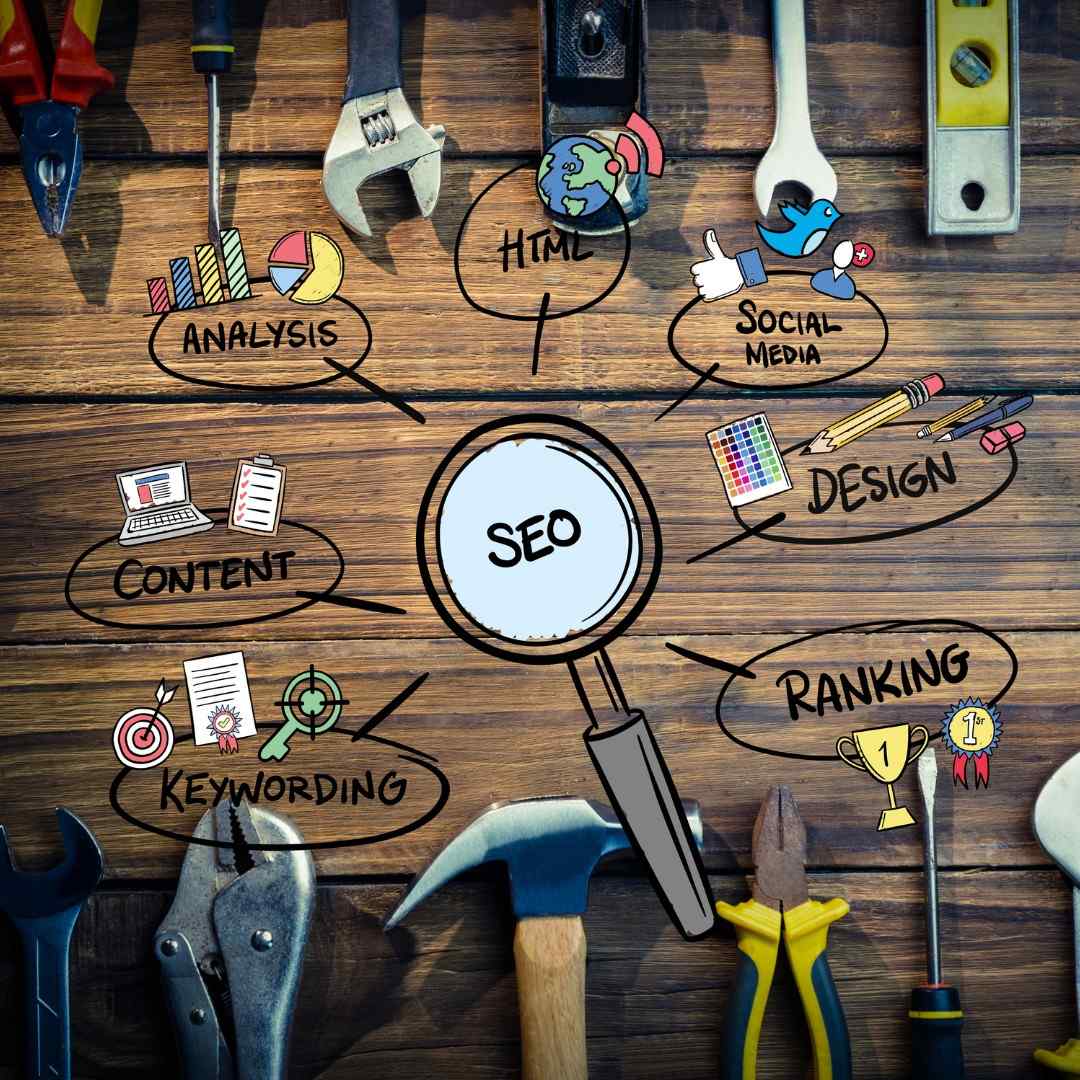
Over the last few years, search engines have moved away from being keyword‑matching machines and now are systems that try to infer intent, context, and even the relationships between users. The old-school SEO services based on matching exact keywords are no longer effective unless accompanied by strategies incorporating semantic understanding. Users now demand answers, clarity, and relevance, usually instantly. Since search engines begin to use more AI and language models to provide summaries, synthesized responses, or conversational answers, SEO services have to change from optimizing for what users type to optimizing for what users mean.
Search Generative Experience (SGE) is an example of one such evolution that impacts how content gets surfaced. Instead of ten blue links, users are getting overviews, sometimes interactive, that attempt to summarise. This alters the discovery of websites, since content needs to be organised not only around ranking but around being useful in these synthesised formats. SEO agencies must make their clients’ content related, contextually substantial, factually correct, and presented in a manner that machines (language models, AI search interfaces) can take advantage of.
Another trend is the emergence of what can be described as Generative Engine Optimization. In this model content has to be constructed to impact AI-driven search engines (such as ChatGPT, Gemini, Perplexity) as they increasingly offer answers. SEO services that don’t plan for such channels can slowly become invisible, since more and more users might receive answers without ever clicking through conventional result pages. Possessing content that can be quoted or brought up in these “answer engines” becomes inevitable. Researchers are developing frameworks to peak at generative search, prioritizing earned media, third‑party authority, and well-organized, clear content to be assessed and used in AI citations. (arXiv)
Structured data as backbone of contemporary SEO services
Structured data has become a central technical element for SEO services. It contributes to facilitating rich snippets, knowledge panels, voice assistant answers, and other enriched search functions. What structured data does is provide search systems with a more precise map of what content is: what is authorship, what is product or event data, what are reviews, what are technical specs. By encoding information in regular, machine-readable formats, content is more usable for search engines, AI systems, and voice‑based queries. (Search Engine Land)
Using structured data must be done cautiously. Abusing it, applying incorrect schema types, overloading pages, or marking up non‑existing content might result in errors, warnings, or even penalties. SEO services effective today are concerned with the accuracy of markup, verify the structured data against visible content, comply with updated schema vocabularies (e.g. from schema.org), test through tools (rich‑results test, schema validator), and check for errors through console tools. (Bluehost)
Structured data also benefits voice search optimization. With increasing numbers of users phrasing questions through voice assistants, the language is natural, and algorithms prefer content items that are able to provide short, accurate, clear answers. Sites with accurately implemented structured data have a better chance of being surfaced in voice search results or featured snippet‑type answers. (SEO.com)
AI content, human touch, credibility, and trust
Perhaps the most significant change in SEO services is balancing the utilization of AI-powered content generation against authenticity, trust, and human understanding. Whether AI tools are being used to write content, create meta descriptions, aid in structure, or even provide topic ideas, it is now prevalent. But that kind of content, which reads as generic, devoid of domain understanding, devoid of authorship, or that does not dig past superficial treatment, will not succeed. Search engines increasingly seek information that provides value in addition to what competition is offering.
Authorities point out that AI tools must support and incentivize, not substitute for, human imagination. Expert opinions, original data, case studies, examples, brand or personal anecdotes — these are becoming more significant for differentiation. Credibility comes from author attribution, transparency of editing or sourcing, timestamps, regular update of content. SEO services nowadays comprise strategies for claims verification, fact-checking, assurance of sources’ credibility, and trust signals’ development. (Immwit)
Rising metrics, measurement, and assessment in SEO services
As the environment changes, so too must SEO metrics be measured. Old metrics such as keyword ranking, backlinks, and organic sessions remain relevant but are now inadequate in isolation. More recent metrics include frequency as source material for AI-generated summaries, frequency as answer boxes or voice search, featured snippet performance, and the ability to hold users’ attention (time on page, scroll depth, repeat visits).
SEO services will have to increasingly work with tools that provide visibility into these newer aspects. Analytics tools that are integrated with generative search, tools that track zero‑click search impression, tools that monitor structured data performance, and tools that track actual conversational behavior and user satisfaction are becoming part of cutting-edge SEO service offerings.
Furthermore, qualitative measurement—user feedback, trust/satisfaction ratings, reputation, reviews—becomes more prominent when content visibility without click‑through is expanding. If users find answers without clicking, the site’s function changes from traffic attractor to authority creator, and SEO services need to assist clients in retaining or expanding that authority.
Stay tuned for business tips, news and more
Every Monday, Wednesday and Friday

Technical performance, page experience and UX in SEO services
User experience is no longer ancillary; it’s at the core. Core Web Vitals, mobile‑first indexing, site performance, visual stability, interactivity—these are ranking and usability signals. SEO services have to make certain that websites provide fast, stable, responsive, accessible experiences for devices. Whether pages load on time (particularly first contentful paint, time to interactive), layout shifts are low, and content can be used immediately, even on slower network conditions, is what counts.
Accessibility is included in this. Making sure that pages can be navigated by those with disabilities, screen readers, alt text, proper contrast, keyboard navigation; all have an impact on the way content is interpreted by users and ever more by algorithms. Accessible sites have lower bounce rates, more engagement, and improved trust signals.
Another dimension is the site architecture’s flexibility. With increasing content scale, SEO services have to facilitate clients in controlling content organization, information architecture, internal linking, canonicalization, duplication, pagination, lazy loading, optimization of images. Having crawling and indexing occur smoothly, content be logically organized, site maps be clean, redirects be in control, broken links be repaired, is involved in sustaining healthy SEO in the long term.
Regional, multilingual, and specialty-focused strategy in today’s SEO services
Companies with a local market or many languages have unique challenges and opportunities. Local SEO is still important for service companies, physical storefronts, or anything that depends on location. SEO companies serving such companies need to make location signals clear: consistent address data, business hours, local reviews, local schema, citation in local directories, Google Business Profile optimisation, responsiveness to local search features (maps, local packs).
Multilingual SEO is more than a simple translation; content must be localised, culturally adapted, geo-targeted DNS or subdirectories/subdomains as required, hreflang tags, so that the problems of duplicate content are avoided. SEO services must be sensitive to linguistic nuance, local behavior of users, local idioms, local search patterns.
For specialized subjects, focus on specialist content, in-depth expertise, and authoritative sources is vital. Domain authority could be simpler to create within a specialized area if the content is good quality, highly specialized, and consistently relevant to the requirements of that niche. SEO companies operating within niche markets also collaborate with experts in the field to create content that few other companies have, which assists in ranking and in being promoted by AI systems searching for in-depth or technical responses.
Challenges and threats to modern SEO services environment
Among the dangers is excessive dependence on automated or AI‑created content without human intervention. If content creation goes unmonitored, it can have factual inaccuracies, plagiarized passages or un‑novel wording, shallowness, or generic tone that fails to please users. Search engines penalize low‑quality content, and user statistics such as bounce rate, dwell time, repeat visits can degrade. SEO services have to be protected against these pitfalls.
Another obstacle is keeping in step with algorithmic updates. Search engines continually fine-tune ranking methods, update policies with regard to AI content, use of structured data, user signals. Today’s winner can quickly become irrelevant or even penalised tomorrow. SEO services must incorporate monitoring, audit cycles, and the ability to change direction.
Privacy, data governance, and user trust are another challenge. With cookie‑based tracking growing more restricted, with increasing privacy regulations, with users expecting transparency, SEO services need to respond by depending more on first‑party data, open data collection, and user privacy-respecting practices. That impacts measurement, personalisation, and testing.
There is another risk in dilution of brand voice and credibility if content strands are generic or too derivative. When numerous websites create similar AI-generated content that similarly discusses the same things, differentiation is difficult. SEO services need to assist clients in identifying distinct angles, novel data, storytelling, images, or formats that make a difference.
Also, reliance on zero‑click traffic or surfacing in summaries without clicks implies that native site traffic might plateau or decline. Even with elevated visibility, monetisation, ad revenue, lead generation, and audience building might be impacted if individuals obtain answers without actually visiting the site. SEO services must assist in guaranteeing that the site is still converting visitors, that content results in engagement, subscriptions, action, instead of impressions.
Case study concepts and evidence from the real world
Real experiments have started being applied to legitimize methods by some SEO services. For instance, sites that employed structured data for FAQ or review snippets have experienced significant click‑through rate increases. Sites that enhanced author attribution, introduced timestamping, enhanced technical page optimization have seen rankings and traffic stickiness improve. Statistics from Exploding Topics and other studies indicate that platforms with AI-enhanced workflows tend to have increased content production, improved efficiency, but the best-performing ones are those that couple that with human editing and control.
Other examples indicate that zero‑click optimization does not fully diminish the worth of content depth. Sites that spent money on content depth kept ranking well even when search interfaces prioritised overviews or short answer cards because when consumers sought detail, they clicked through. Having well-structured, deeply informative content enabled them to preserve authority.
In conclusion
SEO services are no longer in a position to concentrate tightly on a specific list of standard tactics. The landscape has changed significantly. Success will now rely on change anticipation, flexibility, trust acceptance, systematic clarity, adaptation to changing search engines, AI‑powered answer systems, conversational intent. Companies that put money into SEO solutions that are change forward, that reconcile human imagination with automation, that create content ecosystems, that recognize not just what users type but what they mean and need, will be the survivors.