Why Is A Holistic Digital Marketing Service The Key To Modern Brand Longevity?
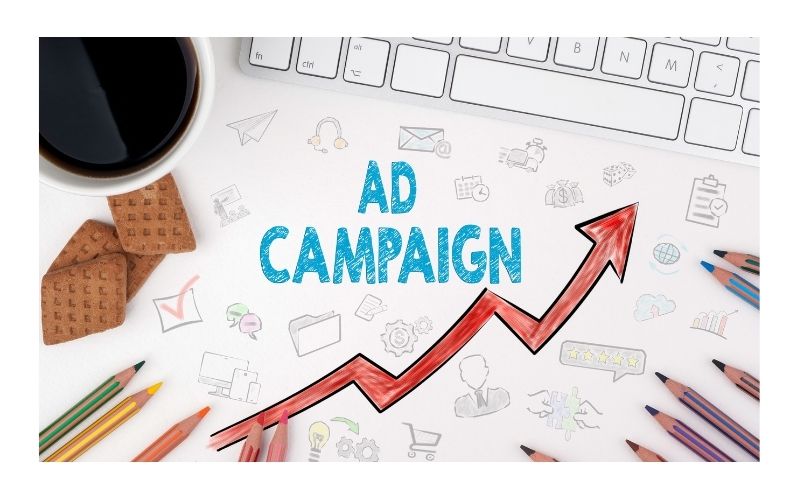
Why Google Ads Services Have Become Central to Business Growth
In a digital landscape where visibility is everything, Google Ads services have emerged as one of the most powerful and reliable tools for businesses seeking to reach high-intent audiences at the exact moment they are searching for a solution. Unlike social media advertising, which places content in front of users who may or may not be in a buying mindset, Google Ads services connect businesses with people who are actively searching — people who have already decided they need something and are looking for the right provider to deliver it.
This intent-based nature of Google Ads services is what gives the platform its extraordinary commercial power. A user typing “best accounting software for small businesses” or “emergency plumber in Bangalore” is not browsing casually — they are on a mission. A well-placed, well-crafted ad that intercepts that search at precisely the right moment can convert a stranger into a customer in a single click. No other advertising medium offers this level of intent alignment.
The scope of Google Ads services has also expanded considerably beyond simple search text ads. Today, a comprehensive Google Ads services strategy can encompass search campaigns, display network advertising, YouTube video campaigns, Shopping ads for e-commerce, Performance Max campaigns that use machine learning to optimize across all Google inventory simultaneously, and app promotion campaigns. Each of these formats serves a different purpose in the customer journey, and the best Google Ads services strategies use them in deliberate combination to cover every stage of the funnel.
For businesses in competitive industries, the question is no longer whether to invest in Google Ads services — it is whether the investment is being managed with the sophistication and strategic depth required to produce the best possible return.
Pay Per Click Advertising: Understanding What You Are Really Paying For
The term pay per click advertising describes a pricing model in which advertisers pay only when a user clicks on their ad rather than simply for the ad being displayed. This model has made digital advertising more accessible and accountable than any previous form of media buying — and it has fundamentally changed how businesses think about marketing investment.
In pay-per-click advertising, the cost of each click is determined through an auction mechanism. When a user enters a search query, Google runs an instantaneous auction among all advertisers bidding on relevant keywords. The auction outcome is determined not just by bid amount but by Ad Rank — a composite score that factors in bid, expected click-through rate, landing page experience, and ad relevance. This means that pay per click advertising rewards quality as well as budget — a well-optimized campaign with high-quality scores can outperform a higher-spending competitor with poor relevance.
Understanding the economics of pay per click advertising requires looking beyond the cost per click to the metrics that actually reflect business outcomes. Cost per lead, cost per acquisition, and return on ad spend are the numbers that matter. A campaign generating clicks at ₹5 each that never converts is dramatically less valuable than a campaign generating clicks at ₹50 each that consistently converts at a healthy rate. This distinction — between activity metrics and outcome metrics — is one of the most important conceptual shifts for businesses entering pay per click advertising for the first time.
Quality Score is the single most powerful lever in pay per click advertising efficiency. By aligning keywords, ad copy, and landing pages with each other and with user intent, advertisers can improve their Quality Scores — which in turn reduces the cost per click and improves ad position. This virtuous cycle means that investment in campaign quality directly reduces the cost of acquiring each customer over time.
What a Great Google Ads Agency Actually Does
Many businesses run Google Ads campaigns themselves, often with disappointing results. The gap between a self-managed campaign and one managed by a skilled Google Ads agency is typically substantial — not because the platform is inaccessible, but because effective campaign management requires a combination of technical expertise, strategic thinking, creative skill, and continuous optimization that is difficult to maintain alongside the demands of running a business.
A great Google Ads agency begins every engagement with a thorough understanding of the business it is serving. What products or services generate the most revenue and profit? Who is the ideal customer? What search terms do customers use at different stages of their decision journey? What is the competitive landscape on key terms? What has been tried before, and what were the results? This foundational research shapes the entire campaign architecture and ensures that the budget is deployed where it will have the greatest impact.
Keyword strategy is one of the most consequential decisions a Google Ads agency makes on behalf of a client. The selection of keywords—which terms to target, which to exclude through negative keyword lists, and how to balance broad, phrase, and exact match types—determines which searches trigger the ads and which do not. A poorly constructed keyword strategy leads to wasted spend on irrelevant searches and missed opportunities on high-value terms. A well-built keyword strategy ensures that every rupee of ad spend is working toward a defined business objective.
Campaign structure, bidding strategy, ad copy testing, landing page optimization, audience layering, and conversion tracking setup are all dimensions of the work a good Google Ads agency manages on an ongoing basis. The best agencies treat campaigns as living systems that require constant attention and refinement — not as set-and-forget configurations.
Stay tuned for business tips, news and more
Every Monday, Wednesday and Friday

Why Working With a Specialist PPC Advertising Agency Delivers Better Results
The case for working with a specialist PPC advertising agency rather than managing campaigns in-house or through a generalist marketing provider rests on three pillars: expertise, tools, and accountability.
Expertise is the most obvious advantage of a specialist PPC advertising agency. Teams that work exclusively on paid search campaigns develop a depth of platform knowledge, a library of tested strategies, and a pattern recognition capability that generalists simply cannot match. They have seen what works across dozens of industries and hundreds of campaigns. They know which bidding strategies perform best in which competitive conditions. They understand how platform algorithm changes affect campaign performance and how to adapt quickly. This accumulated expertise is the agency’s most valuable asset—and it translates directly into better results for clients.
Tools matter enormously in PPC campaign management. Professional PPC advertising agency operations use advanced bid management platforms, keyword research tools, competitive intelligence software, and attribution modeling systems that go well beyond what Google’s native interface offers. These tools enable more precise bidding, more thorough keyword discovery, more accurate performance attribution, and faster identification of optimization opportunities.
Accountability is the third pillar. A professional PPC advertising agency operates with clearly defined performance metrics, regular reporting cadences, and a contractual commitment to delivering results. This accountability structure creates the right incentives—agencies that are measured on business outcomes rather than activity metrics are motivated to optimize for what actually matters to the client.
Google AdWords Advertising: Then, Now, and What It Means for Your Business
Google AdWords advertising — the legacy name for what is now simply Google Ads — has been the backbone of digital performance marketing since its launch in 2000. The evolution from those early text-based search ads to today’s sophisticated, AI-powered, cross-channel advertising platform is a story of continuous innovation that has made Google AdWords advertising more powerful, more measurable, and more complex than most businesses realize.
The introduction of Smart Campaigns and Performance Max has brought machine learning to the center of Google AdWords advertising strategy. These campaign types use Google’s AI to optimize bids, targeting, and creative in real time—processing signals that no human campaign manager could evaluate at the same speed or scale. For businesses with clear conversion goals and sufficient conversion data, these automated approaches can deliver excellent results.
However, the automation that makes Google AdWords advertising powerful also requires careful human oversight. Automated systems optimize toward the objectives they are given — and if those objectives are poorly defined, the optimization will go in the wrong direction. Ensuring that conversion tracking is accurate, that the right conversion actions are prioritized, and that the automated system’s decisions are regularly reviewed and corrected is essential to getting the best from modern Google AdWords advertising.
The creative dimension of Google AdWords advertising is often underinvested. Ad copy quality directly influences click-through rate, quality score, and ultimately the cost and effectiveness of the entire campaign. Responsive search ads, which allow multiple headlines and descriptions to be tested in combination, allow advertisers to discover which messaging resonates most strongly with their audience. Systematic creative testing is one of the most consistently impactful optimization activities in Google AdWords advertising.
Conclusion
For businesses that want to turn Google’s search network into a reliable, scalable, and measurable growth channel, the right partner makes all the difference. Digiworq Marketing & Technology Solutions brings deep expertise in Google Ads services, pay-per-click advertising strategy, and campaign management to help businesses of every size compete effectively in the digital marketplace. With Digiworq managing the complexity, businesses can focus on what they do best—while their ads work harder than ever.