What Makes a Web Development Company Stand Out in Today's Digital Landscape?
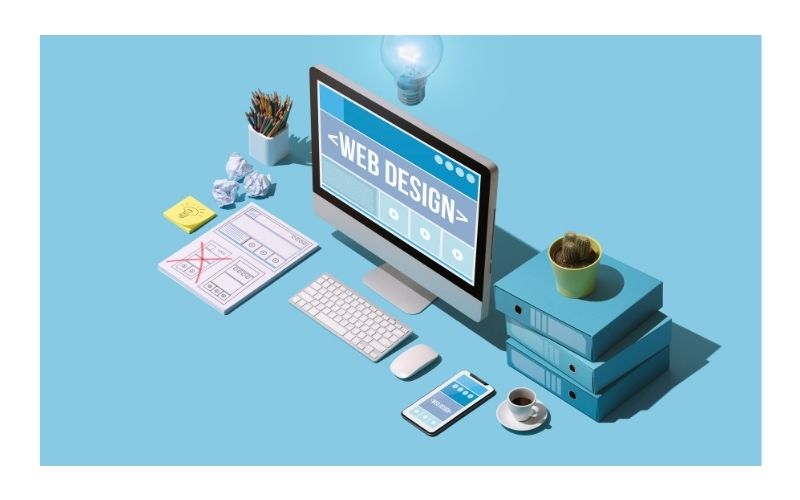
This is not a minor operational detail. It is a strategic reality that the most successful businesses in every industry have internalized and acted upon decisively. The gap between businesses that have invested significantly in professional web development and those that have relied on shortcuts is evident in their traffic, conversion rates, customer retention, and, ultimately, their revenue. In a digital economy where your website is often the first and most lasting impression you make on a potential customer, the standards to which it is built are not a matter of preference — they are a matter of competitive survival.
Yet despite this reality, a significant number of businesses continue to underinvest in their digital presence, either because they underestimate its impact, have had disappointing experiences with web development in the past, or are uncertain about how to evaluate the options available to them. This piece is written to address all three of those barriers—to clarify what professional web development services actually involve, why they matter so profoundly, and how to identify the right partner to deliver them.
Is Your Web Development Company Building a Website or Building a Business Asset?
The distinction between a web development company that builds websites and one that builds business assets might sound like marketing language, but it reflects a genuine and consequential difference in approach, capability, and outcome. Understanding this distinction is one of the most important things a business leader can do before entering any web development engagement.
A company that builds websites is focused primarily on the deliverable—a functioning site that matches the agreed specification, delivered within the agreed timeline and budget. There is nothing inherently wrong with this—meeting specifications, timelines, and budgets are all important. But a company that is focused solely on the deliverable often produces sites that are technically competent but strategically hollow. They look the part without performing the part.
A company that builds business assets approaches the engagement from an entirely different starting point. Before anything is designed or developed, they invest time in understanding the business — its goals, its customers, its competitive context, and the specific outcomes the website needs to deliver. This understanding shapes every subsequent decision, from the information architecture and content strategy to the design aesthetic and technical implementation. The result is not just a website that works — it is a website that works for the business, driving the specific outcomes that matter most.
The practical implications of this distinction show up in the questions a web development company asks during the sales and discovery process. A company focused on deliverables will ask about design preferences, platform requirements, and timeline expectations. A company focused on business outcomes will ask about conversion goals, target audience psychology, competitive differentiation, and how success will be measured. The depth and quality of these early conversations are one of the most reliable indicators of the quality of the partnership that will follow.
Why Does Website Design and Development Require Equal Mastery of Both Disciplines?
The term “website design and development” is so commonly used as a single phrase that it is easy to forget that it actually describes two distinct disciplines—each with its own body of knowledge, its own craft traditions, and its own set of principles. The reason they are so consistently mentioned together is that the quality of the final product depends not just on excellence in each discipline individually but on the quality of the collaboration between them.
Design, in the context of web development, is fundamentally about communication and experience. It is the practice of arranging visual and interactive elements in ways that guide user behavior, communicate brand values, build emotional connection, and ultimately serve the business’s conversion goals. Great web design is not about following trends or demonstrating technical virtuosity with complex visual effects—it is about solving human problems with elegance and clarity. The best web designers are as much psychologists and strategists as they are visual artists.
Development is the engineering discipline that transforms design concepts into functional digital experiences. It involves writing code that renders correctly across thousands of different devices and browser combinations, loads quickly on connections of varying speed and reliability, handles user interactions gracefully, integrates with third-party systems, and maintains its performance and stability under real-world conditions. Great development is invisible to the end user — it is the invisible infrastructure that makes every interaction feel smooth and effortless.
The collaboration between design and development is where projects either flourish or falter. When designers make choices without understanding development constraints — specifying interactions that are technically impractical, designing layouts that do not adapt gracefully to smaller screens, or selecting typefaces that are not optimized for web rendering — the development process becomes a series of compromises that degrade the final product. When developers implement designs without understanding the designer’s intent — cutting corners on animation timing, approximating colour values, or simplifying layouts in ways that undermine the user experience — the result falls short of what the design promised. The best web development teams have built culture and processes that make genuine collaboration between these disciplines the norm rather than the exception.
Stay tuned for business tips, news and more
Every Monday, Wednesday and Friday

What Criteria Actually Separate the Top Web Development Companies From the Rest?
With thousands of web development firms competing for business at every price point, the task of identifying the truly top web development companies requires looking beyond the obvious signals — polished portfolios, impressive client logos, and compelling case studies — to the less visible but more revealing indicators of genuine capability and reliability.
Process maturity is one of the most telling differentiators. The best companies have developed and refined their project methodologies through years of real-world experience, building processes that consistently produce excellent outcomes while managing the inevitable complexities and surprises that arise in any software project. They can articulate their process clearly, explain the reasoning behind each stage, and demonstrate how it has served clients in the past. Companies without mature processes tend to wing it — and while they may occasionally produce good results, they cannot do so consistently.
Technical depth beneath the surface of the portfolio is another critical criterion. Many companies can produce visually impressive websites that look great in screenshots but perform poorly in reality—slow load times, poor mobile experiences, accessibility failures, and security vulnerabilities are all common in sites that prioritize visual appeal over technical excellence. Evaluating technical quality requires looking beyond the visual portfolio to performance metrics, technical architecture decisions, and the qualifications and experience of the development team.
Client retention and relationship longevity are perhaps the most honest indicators of a web development company’s true quality. Companies that consistently deliver genuine value maintain long-term relationships with their clients—they become trusted partners rather than one-off vendors. Asking prospective agencies about the average duration of their client relationships, and speaking directly with long-term clients about their experience, reveals far more about the true quality of the partnership than any sales presentation can.
What Advantages Does a Web Development Agency in Bangalore Bring to International Clients?
The reputation of a web development agency in Bangalore in the global technology services market has been built over decades of consistent delivery for clients spanning every continent and industry. It is a reputation grounded not in geography alone but in the specific combination of advantages that Bangalore’s ecosystem consistently produces — advantages that are compelling for international clients evaluating their web development options.
The depth of the engineering talent pool in Bangalore is genuinely extraordinary by any global standard. The city’s educational institutions, its decades of technology industry development, and its position as the preferred Indian base for global technology giants have created a concentration of technical skill that is matched by very few cities anywhere in the world. For web development agencies drawing from this talent pool, the result is teams with strong fundamentals across the full stack of modern web technologies, capable of tackling projects of any complexity with confidence.
Cultural alignment with international business expectations is another advantage that is sometimes overlooked. Bangalore’s technology industry has spent decades building the communication skills, project management practices, and quality standards that international clients require. The best agencies in the city are not learning how to work with international clients — they have been doing it successfully for years and have built their entire operating model around making these partnerships work seamlessly.
The value equation that a web development agency in Bangalore offers — world-class technical and strategic capability at a fraction of the cost of equivalent talent in Western markets — is perhaps the most compelling and most frequently cited advantage. But it is important to understand this value proposition correctly. It is not about getting cheap services — it is about accessing exceptional services at a price point that allows businesses to invest more of their resources in their actual product and market development.
How Is E-Commerce Website Development Defining the Next Generation of Retail Success?
The transformation of commerce from primarily physical to increasingly digital is one of the defining business trends of the past two decades, and e-commerce website development sits at the centre of this transformation. For businesses navigating this shift — whether they are traditional retailers adapting to new consumer behaviors or digital-native brands building from the ground up — the quality of their e-commerce platform is not a secondary concern. It is the primary determinant of their ability to compete and grow.
The technical complexity of a modern e-commerce platform is substantially greater than most business owners appreciate before they embark on their first serious development project. The visible elements—product pages, shopping cart, and checkout flow—represent only a fraction of the total system. Beneath the surface lies a complex architecture of inventory management systems, payment processing integrations, fraud detection mechanisms, order management workflows, customer account systems, email automation triggers, analytics tracking, and performance optimization layers that all need to work together flawlessly to deliver the seamless shopping experience that today’s consumers expect.
The performance standards for e-commerce are particularly demanding because the consequences of falling short are so directly measurable. Research consistently demonstrates that page load speed, mobile usability, checkout simplicity, and site reliability all have direct, quantifiable impacts on conversion rates and revenue. A one-second improvement in page load time can produce conversion rate improvements that translate into significant annual revenue increases for high-traffic stores. A poorly designed mobile checkout can silently hemorrhage revenue from the growing proportion of shoppers who browse and buy on their phones.
The strategic opportunity in e-commerce website development lies in going beyond technical adequacy to genuine experience excellence. The stores that consistently outperform their competitors are those that have invested in understanding their customers deeply and translating that understanding into every element of the shopping experience—from the way products are organized and presented to the language of the checkout confirmation email. This level of experience design requires the kind of integrated thinking across strategy, design, and development that only the best web development teams consistently deliver.
Conclusion
The digital economy does not reward enough. It rewards exceptional websites that load fast, convert brilliantly, and leave every visitor with a stronger impression of the brand than they arrived with. Building that kind of digital presence requires a web development partner with the strategic depth, design talent, and technical capability to deliver it consistently. Digiworq Marketing & Technology Solutions is a web development agency in Bangalore that has built its reputation on exactly this kind of comprehensive excellence — delivering web development services that combine business strategy, creative design, and engineering precision into digital assets that drive real, measurable growth for businesses across every industry and scale.