3D Art and Animation: Techniques, Trends, and Business Benefits in 2025
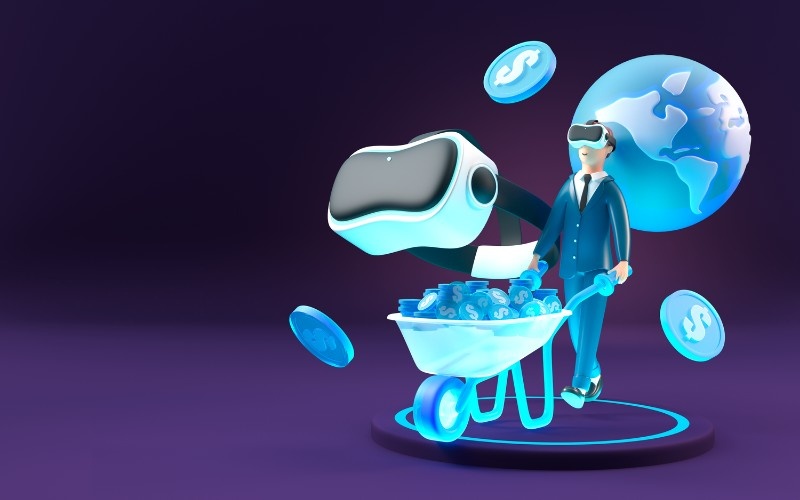
In addition to technical competence, outstanding three-dimensional work relies on artistic sensitivity. The creative aspect elevates technically sound models and animation into engaging visualizations that communicate with audiences.
Principles of composition direct how items are positioned inside frames. Knowledge of balance, focal areas, the rule of thirds, and other principles of composition facilitates the creation of aesthetically pleasing and effective images. Even in three-dimensional space, these tried-and-true principles of art hold and are effective.
Effectively planned color choice guides the viewer’s eye, evokes feelings, and aids in reinforcing the brand. An awareness of complementary color, temperature, saturation, and harmony enables artists to make more compelling images.
Lighting is perhaps the most effective tool in the three-dimensional artist’s arsenal.
Not only for visibility, lighting creates mood, adds depth, focuses attention, and plays a great role in realism. Great lighting can make even the simplest scene look good, yet bad lighting can ruin even the most accurate models.
Animation principles, first established for classical animation, are still the core principles in the three-dimensional world. Principles such as squash and stretch, anticipation, staging, and timing generate natural motion. Familiarity with these principles distinguishes robot-like movement from performances that can express personality and emotion.
Narrative ability separates functional animation from memorable experience. Even in non-narrative applications such as product visualization, unstated storytelling techniques lead audience members through information and establish emotional resonance. Good three-dimensional work doesn’t merely present; it conveys, connects, and resonates.
Style creation enables work to be distinct in a growing congested marketplace. Although photorealism is given ample publicity, stylized styles are frequently more memorable and better suited for specific uses. Creating recognizable visual styles becomes a trademark that distinguishes producers and draws similar clients.
The Business Consequences of Quality Three-Dimensional Content
Companies now increasingly understand that top-quality visual material is not just about looks—the business results are immediate. It’s this association that makes investment in expert three-dimensional services worthwhile.
Engagement statistics time and again demonstrate that video content, especially animation, engages and holds viewer attention better than static solutions. Algorithms for social media platforms prefer video content, further amplifying organic reach. Sites with quality animations generally exhibit better time-on-site statistics as well as fewer bounce rates.
Conversion improvements often follow from better product understanding. When customers can thoroughly examine products, understand features, and visualize usage, purchase confidence increases. This proves particularly valuable for complex or expensive products where purchase decisions require significant consideration.
Brand image is enhanced by classy, professional-looking visual materials. Well-made animations convey that a company cares about its appearance, implying the same level of attention for offerings and services. Poor-quality visuals have the opposite effect, damaging credibility irrespective of true offering quality.
In competitive markets, differentiation comes from being different. The dynamic nature of animated content presents innovative opportunities to make brands stand out from others using traditional imagery. Compelling visual experiences create recall and preference for brands.
Cost efficiency develops over time. Professional animation does have an upfront cost, but the content can be reused across channels and campaigns. Physical product photography necessitates samples, setup, and reshoot expenses when products are modified. Digital assets can be adjusted and repurposed more effectively.
Global accessibility becomes easier with animation. Language limitation lessens as visual narration transmits messages. Culturalization is easier when adapting digital content compared to reshooting live-action footage for various markets.
Stay tuned for business tips, news and more
Every Monday, Wednesday and Friday

Create 3D Models: Techniques and Technologies
The science and art of creating three-dimensional models have changed dramatically with the improvement in software and computer capabilities. Knowing current methods and technologies can inform one of what can be done and how various methods meet different requirements.
Poly modelling is still core, with the manipulation of vertices, edges, and faces to construct forms. This method allows for very precise control and is still commonly applied to characters, props, and hard-surface items. Contemporary software increasingly has elegant interfaces for this method, but mastery is still a function of considerable skill acquisition.
Sculpting methods emulate clay manipulation, enabling artists to pull, push, smooth, and refine surfaces naturally. It is ideal for organic shapes such as characters, beasts, and foliage. High-definition sculpts have millions of polygons, which record the finest details before they get optimized for production rendering.
Procedural modelling applies mathematical rules and algorithms to create intricate forms. It works well for environments, architecture, and recurring patterned elements. Parameters can be varied quickly in order to create variations, which makes procedural methods useful for the creation of larger scenes.
Photogrammetry records real-world objects by photography, and with software processing multiple photographs to recreate three-dimensional shapes. It produces high realism and is used in heritage conservation, game development, virtual production, and others. The technology is now more accessible, although processing still depends on computational power.
CAD-based modelling emphasizes precision and technical accuracy. Engineering and architectural applications often begin with CAD data, which can be converted or adapted for visualization purposes. This workflow ensures that visual representations accurately reflect specifications and designs.
Retopology and optimization transform high-detail models into high-performance versions appropriate for real-time use or animation. It entails remeshing surface topology to decrease polygon counts while maintaining visual fidelity. Well-optimized model reduction is finding the middle ground between detail and performance, important in gaming and interactive use.
Future Trends Impacting Three-Dimensional Animation
The industry continues to grow fast, as new technologies and shifting consumption habits steer new directions. Knowledge of these trends enables companies to get ready for changing opportunities and audience expectations.
Real-time rendering is arguably the most important change. In the past, final imagery used to be created by lengthy rendering. New technologies offer high-quality rendering with interactive speeds, fundamentally changing the workflow of creation and presentation. Virtual production methods employed in large-scale film and television productions indicate what this technology can do.
Artificial intelligence and machine learning are starting to influence different production aspects. From rigging and automated animation to style transfer and content generation, AI technology can make it more efficient while potentially lowering barriers to entry. The relationship between human imagination and AI changes as those technologies improve.
Virtual and augmented reality create new opportunities for three-dimensional content. In addition to conventional screen-centric experiences, immersive settings require spatial awareness and interactive content. With these technologies increasingly available, there will be greater demand for three-dimensional content created for the purpose of immersive experiences.
Personalization and interactive content are along general lines of digital trendsMore than passive viewing, audiences insist on more influence and control to personalize the experience. Three-dimensional content enables interactive product configurators, choose-your-own-adventure storytelling, and custom visualizations.
Cloud collaboration tools and workflows enable distributed teams to seamlessly work together. With remote work becoming the norm, production pipelines transform to be able to tap talent anywhere. Cloud rendering services democratize access to computational power, opening high-quality production to more.
Considerations of sustainability are arising in virtual production. Although virtual content sidesteps most physical production environmental ramifications, the power consumption of rendering and computation brings into focus effective practice. Studios increasingly think about optimization not only for performance but also for environmental sustainability.
Conclusion
The tour of the three-dimensional animation and modelling world discloses an industry that stands at a compelling crossroads of art, technology, and business strategy. What has started as a specialized tool for visualization and entertainment has become a vital part of contemporary communication in almost every industry. The capacity to generate, process, and display visual information in three dimensions has critically altered demands for how products are promoted, concepts described, and narratives shared.
Bangalore’s development of specialized creative services is a prime example of how technology clusters can extend beyond their technical domains to include creative industries. Bangalore’s special blend of technical expertise, entrepreneurial zeal, and creative imagination has created an environment where companies can outsource world-class three-dimensional content creation without the overhead of in-house capability maintenance or working with distant partners where collaborative engagement is cumbersome.
Organizations wanting to establish credibility, connect with audiences, and stand out from competitors all need to focus on the quality of visual content. The cost of investment might seem high, but the alternative—poor visual presence in a more and more visual digital world—has even higher costs in lost opportunity and bruised brand reputation.
The future holds much promise with new technologies unlocking greater creative potential. But technology by itself does not always lead to communication effectiveness. It takes the integration of technical capability with creative vision, strategic planning, and insight into human psychology to create content that not only impresses but also meets desired results.
Digiworq Marketing & Technology Solutions embodies this integration of skills, providing customers with access to extensive three-dimensional animation and modelling services supported by technical ability as well as strategic marketing advice. Knowing that visual content is a part of a well-coordinated strategy and does not stand alone, Digiworq does every project, considering brand consistency, target market analysis, and quantifiable, rich results. Digiworq is a perfect fit for organizations wishing to tap into the power of three-dimensional animation as a great marketing and communications tool.